The Mirror
EditorialAboutA+a Study CentreA+a ArchiveShopClose Menu
We are planted here, now. What will we plant for present and future generations?1
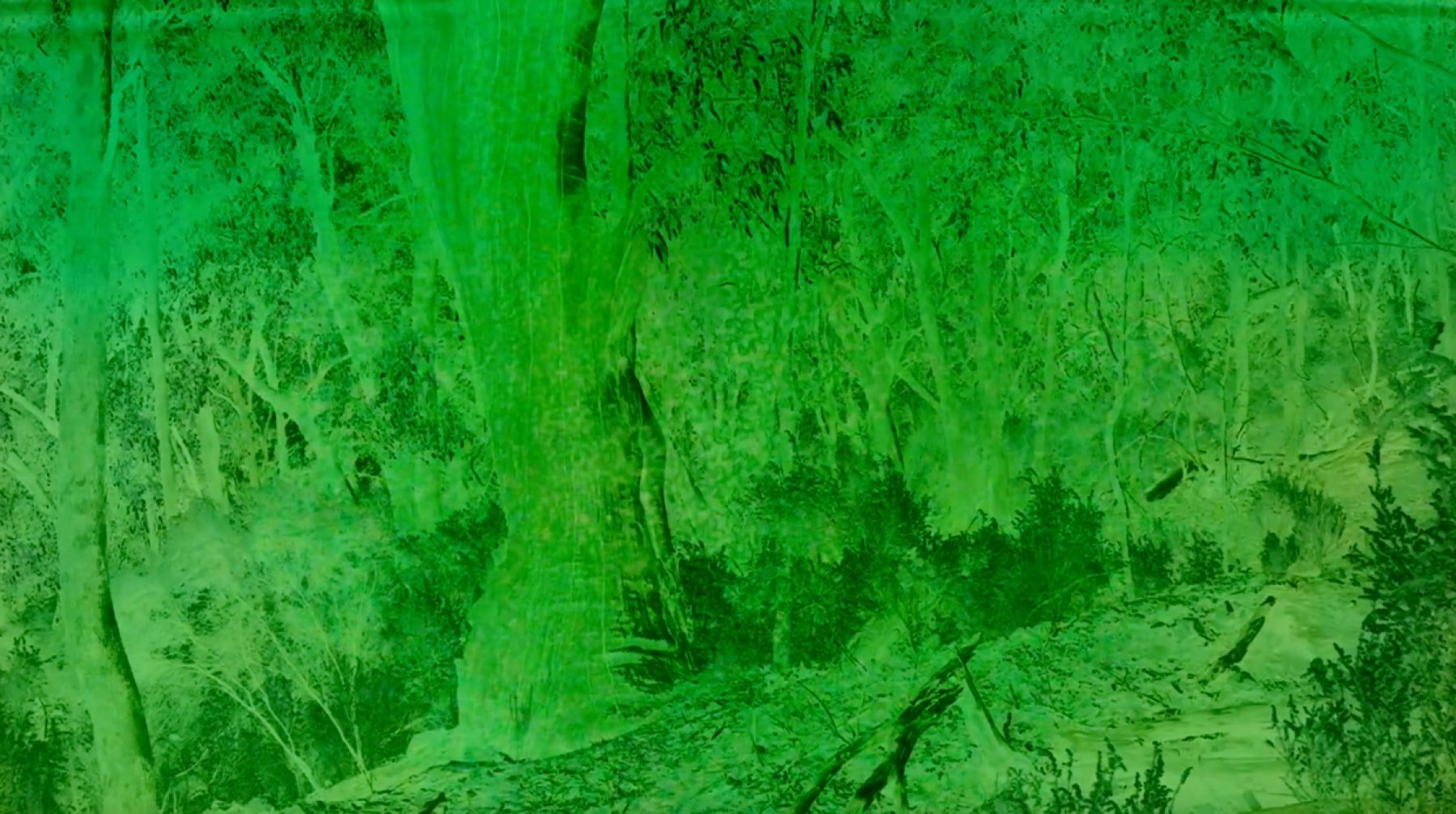
Planted is a multi-layered video composition of abstracted and naturalistic imagery and sound. It is influenced by plant data and Paul Fletcher's own data input, which simultaneously depicts multiple times or eras in a landscape. The video captures neither an objective or subjective view, instead the viewer is invited to contemplate and untangle intertwined, intersubjective, unfamiliar and imagined other-than human, perspectives.
The electronic orchestration draws on signals from a Yarrow pot plant. Shifts in electrical data from the plant are converted to midi-electronic music note pitches, timing and volume—it is a measure of chemical exchanges between cells in plants. The same data is also used to trigger alterations to one of the layers composed of visually synthesised shapes, patterns and textures. These are manually applied to footage shot around the Dookie region of bush reserves and other areas alongside an altered landscape of sheep grazing. The altered landscape was developed by combining abstracted video footage of sheep at Dookie with imagery of strands of wool leaf litter and other plant material filmed with the digital microscope in the Centre of Visual Art Dookie Lab.
A series of notes and visual explorations developed by Paul Fletcher during his May 2022 residency at Dookie can be explored through Fletcher's website: Micro, Macro, Interconnected, Views & Relations or Listening and feeling our way Through a Sensory Field
Author/s: Paul Fletcher
Video: PLANTED, HD VIDEO, Stereo Sound. Duration: 5minutes 45 seconds. 2022-23
Paul Fletcher's sound art
Paul Fletcher's latest installation The Symbiotic Pulse
Paul Fletcher https://artandaustralia.com/A__A/m106/planted
Art + Australia Editor-in-Chief: Su Baker Contact: info@artandaustralia.com Receive news from Art + Australia Art + Australia was established in 1963 by Sam Ure-Smith and in 2015 was donated to the Victorian College of the Arts at the University of Melbourne by then publisher and editor Eleonora Triguboff as a gift of the ARTAND Foundation. Art + Australia acknowledges the generous support of the Dr Harold Schenberg Bequest and the Centre of Visual Art, University of Melbourne. @Copyright 2022 Victorian College of the Arts The views expressed in Art + Australia are those of the contributing authors and not necessarily those of the editors or publisher. Art + Australia respects your privacy. Read our Privacy Statement. Art + Australia acknowledges that we live and work on the unceded lands of the people of the Kulin nations who have been and remain traditional owners of this land for tens of thousands of years, and acknowledge and pay our respects to their Elders past, present, and emerging. Art + Australia ISSN 1837-2422
Publisher: Victorian College of the Arts
University of Melbourne
Editor at Large: Edward Colless
Managing Editor: Jeremy Eaton
Art + Australia Study Centre Editor: Suzie Fraser
Digital Archive Researcher: Chloe Ho
Business adviser: Debra Allanson
Design Editors: Karen Ann Donnachie and Andy Simionato (Design adviser. John Warwicker)
University of Melbourne ALL RIGHTS RESERVED