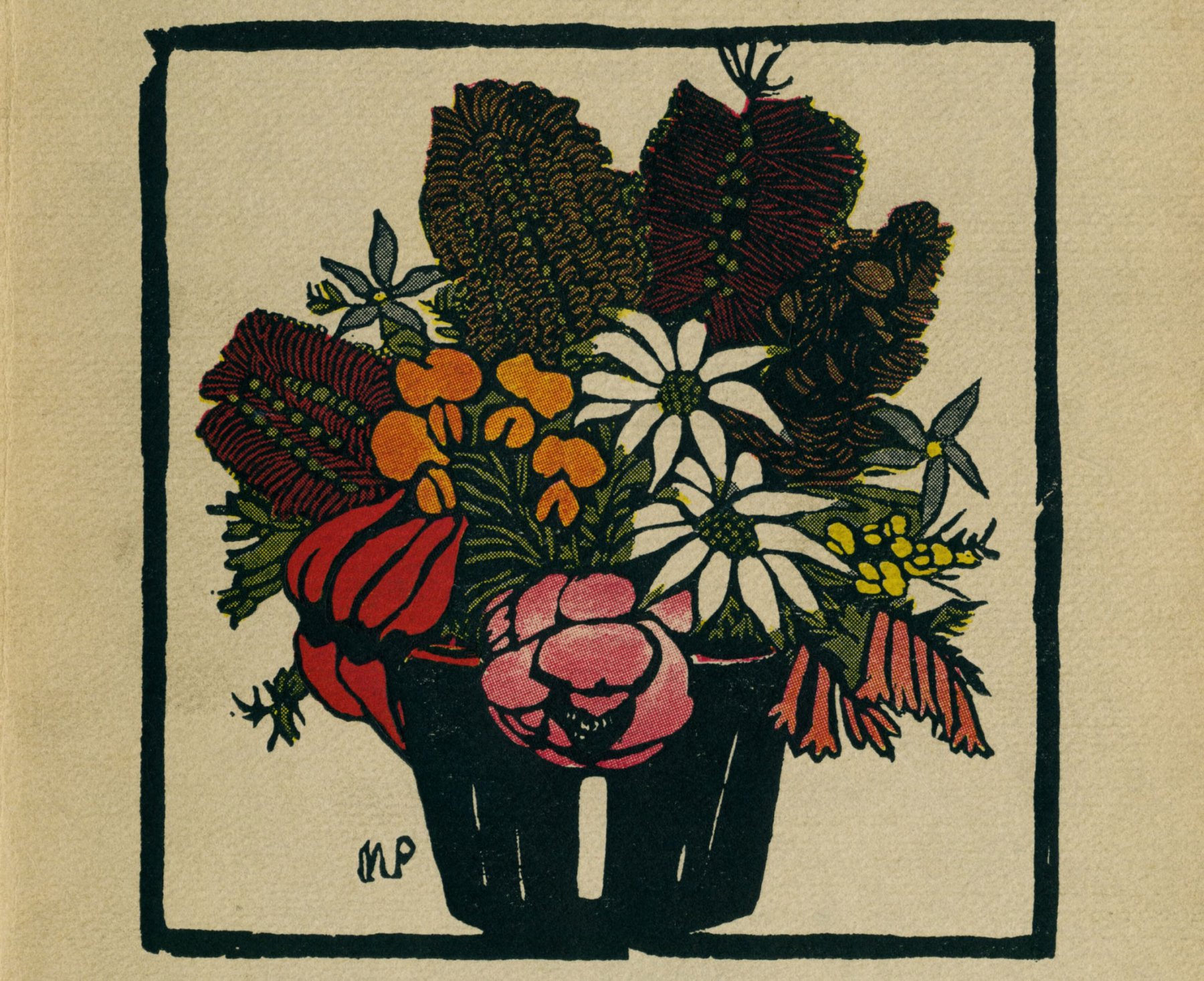
The “new” Brisbane. How could anyone tell? No one remembers what the old Brisbane was like.
—Pat Hoffie, 2003.
Tasked with tracking the moving wave of ever new art, the art magazine is a consummate artefact of modernity. It requires an editor with an eye for what resonates with the now in both art and its criticism. But only a small fraction of it will go to press, and most of those fortunate few that get their ‘fifteen minutes’ in the magazine will, with the magazine, be shelved when the next issue arrives.
Unless picked up by another magazine or by some other means, what the editor ignores is forgotten. Its destiny is oblivion, but that which is shelved is disremembered, by which I mean it lies suspended in the magazine’s archive. Repressed but not foreclosed or fully forgotten, it is like an unconscious reservoir of what once was contemporary, ready to be retrieved for the future.
Because each magazine issue is laid down in the form of sedimentary layers, it leaves a temporal trace, which future palaeontologists sift through looking for fossils as if they are ancestral signs of the now. In this way they consummate a compact between what was once and now is. It is called art history. In its texts, be they written or visual, prosaic or poetic, the past catches up with the present. Its memories revised in the prism of the now become a new past, memories that never were nor will be for long.
The power of the art magazine lies not in the contemporaneity of the next issue, but in its archive of disremembered imagery. In accumulating an historical unconscious that gains weight with every issue, it is an arsenal for shaping and legitimising the future. This is evident in modernity’s ubiquitous ‘history wars’, which are only concerned with the past to the extent that it justifies current ideologies. This is where art and its criticism is at its most political.
The intense history wars that erupted in the wake of the First World War shaped both Australia’s national politics and birthed its first contemporary art magazine Art in Australia (1916–42).1 As in other nations, the two appeared together as if twins in the same national cause. Art in Australia’s archive reveals an art world deeply factionalised along ideological grounds in debates about the values of modernism and tradition in the making of a national art. In 1945, the young Marxist art critic Bernard Smith complained that because ‘very little attention had {yet} been paid to the history of Australian art’, its art criticism was either debilitated by ‘fear of offending friends’ or descended into ‘uncritical fanaticism’ for ‘fear of praising opponents’.2 Yet the archive of Art in Australia provided him with the means to map these art world battlelines in Australia’s first fully articulated national art history, Place, Taste and Tradition (1945), which he told me was the first Marxist history of a national art. It upturned the actual state of play in the 1920s and 30s by an historical account in which the underdogs, the modernists, were the victors.
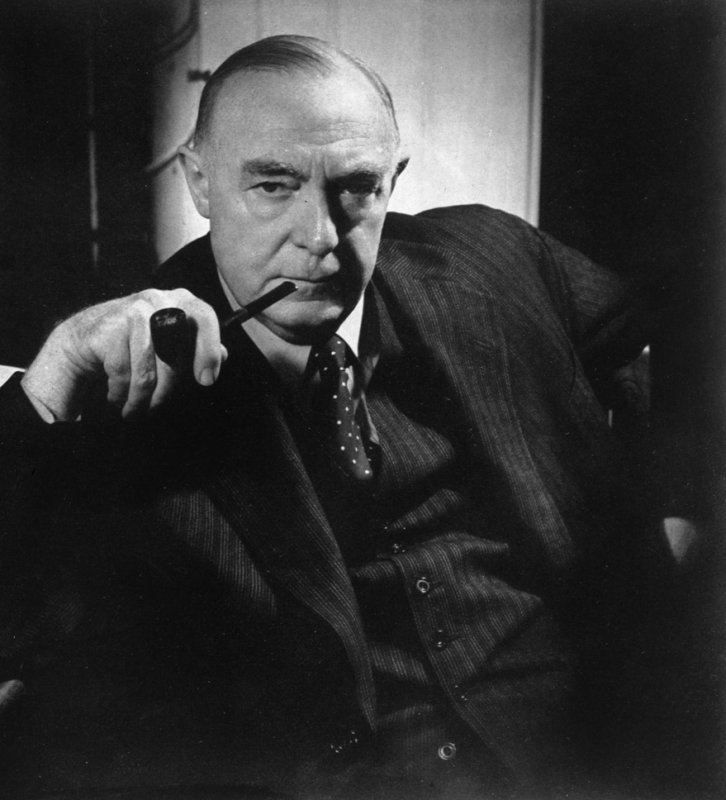
Art in Australia was a self-conscious trend setter, appropriately underwritten by the David Jones department store. Even in its most conservative early years, when its founding and longtime editor Sydney Ure Smith (1887–1949) favoured several right-wing influencers of the day (such as J.S. MacDonald and the brothers Norman and Lionel Lindsay), Art in Australia sought to bring an up-to-date taste to Australia, not least in its adverts of modern life, mostly the latest fashions and consumer products of the high-income cosmopolitan set. But what made Ure Smith a great editor was his eye for the historical and ideological import of Australian contemporary art as a national art.
The ‘endeavour to found an Australian School of Art’ from which ‘a national character {could} necessarily spring’ had been talked about in Australian art circles since the 1860s.3 In 1916, Frederick McCubbin was the first to claim it was accomplished, which he demonstrated by briefly sketching an Australian art history in the paintings of his Impressionist colleagues. He did so in The Art of F. McCubbin, published in May 1916, only four months after the Gallipoli retreat, which already was galvanising the myth of an Australian nation that became a national ethos. Hence McCubbin’s timing was astute. So too was that of Art in Australia, which was launched shortly after The Art of F. McCubbin and took McCubbin’s claims as the basis of its self-appointed mission of nurturing national art. Both publications used the latest state-of-the-art colour printing technology, as if to establish their authority and modernity.
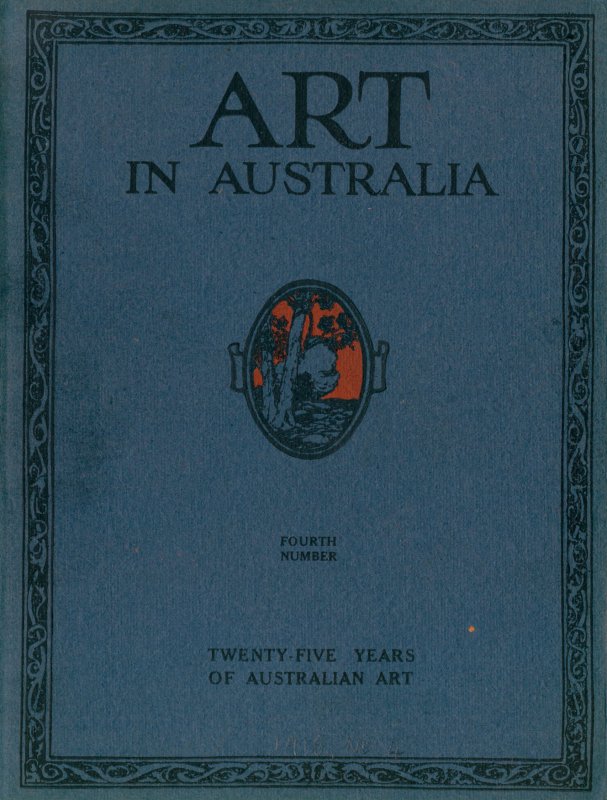
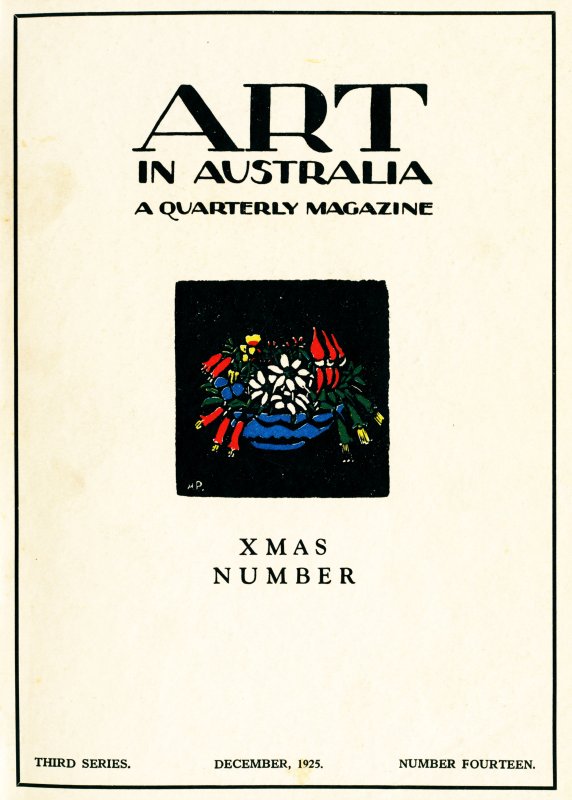
Both publications were also artist-led. McCubbin was closely associated with Melbourne’s National Gallery School (now the Victorian College of the Arts), where he had taught for nearly 30 years. Ure Smith was a practicing artist and a student of Julian Ashton, the patron saint of Sydney’s Society of Artists. Art in Australia was the Society’s barely disguised mouthpiece, with Ure Smith its president between 1921 and 1948. Nevertheless, many of Art in Australia’s early writers were ex-National Gallery School students, such as MacDonald and the Lindsay brothers, who Ashton claimed in the first issue of Art in Australia were lured to Sydney because compared to Melbourne, ‘Sydney is a poem’.
However, Ashton warned that Sydney ‘inspires one to sonatas and forced tones before one has learnt {the} scales and values’ that were instilled in Melbourne’s National Gallery School students. He was referring to the traditional formal virtues of Western painting, which MacDonald insisted artists learn from studying not the new, but the work of the ‘old masters’, thereby imbuing their art with an ‘enduring’ or universal quality.4 Believing that modern art after Impressionism lacked the inheritance of the Western old masters, Ashton, MacDonald and the Lindsay Brothers used the pages of Art in Australia to fight a rearguard battle against the advance of European modernisms.
Despite his misgivings about abstract art and his deference to the ‘old masters’, Ure Smith was wedded to the new, which he featured in Art in Australia’s sister publication: the high-end fashion and design magazine Home. Its profits subsidised the unprofitable Art in Australia. By the mid-1920s, sensing modernism’s advance in England and an emerging generation of Australian artists, Ure Smith also gave voice to writers sympathetic to modernism. Ignoring the complaints of MacDonald and the Lindsay brothers, Margaret Preston’s post-impressionism and her campaign for non-European ancestors (mainly Chinese, Japanese, Mexican and Aboriginal Australian) gained favour in Art in Australia. Nonetheless, Ure Smith stuck to a diplomatic middle road that rendered his idea of Australian art both parochial and provincial. Under his helm, Art in Australia was never an Australian version of the more avant-garde and theoretical French art magazine Cahiers d’art (founded 1926)
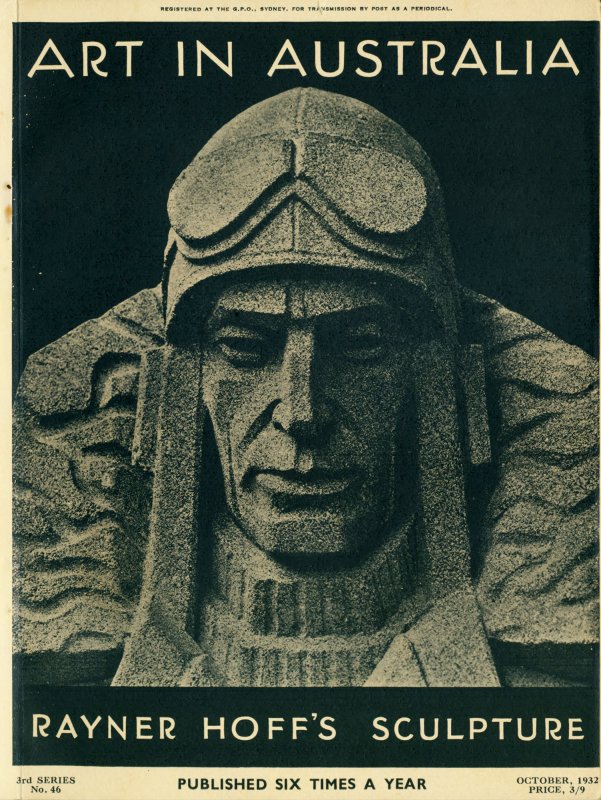
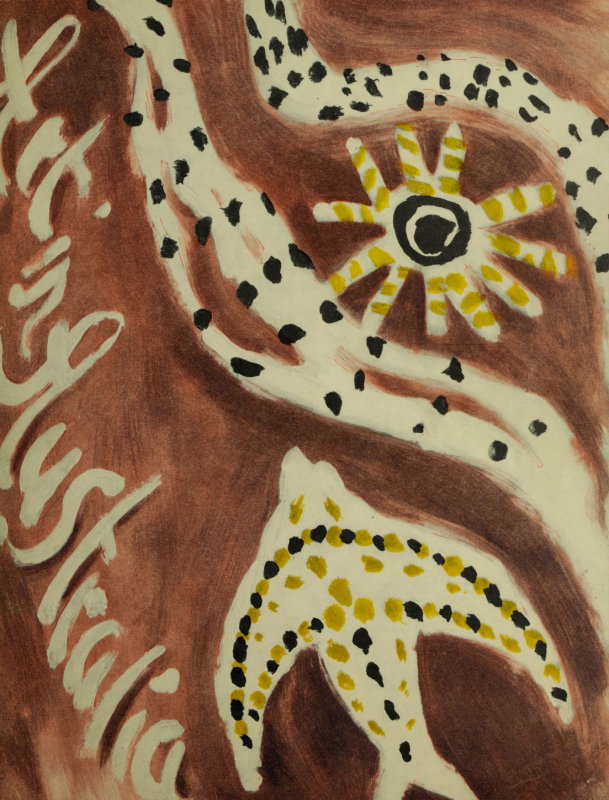
In 1934 Ure Smith sold Art in Australia to the Fairfax press but continued as editor. Forced out in 1938, he put his energies into other endeavours, such as publishing Smith’s Place, Taste and Tradition (1945). Each, after all, had similar opinions about abstract art. The exigencies of the Second World War brought an end to Art in Australia, which ceased publication in 1942. The War would create a new world order. In its wake, new art, new histories and new types of art magazines made the debates, and indeed much of the art that had been published in Art in Australia seem to many, including Smith, irrelevant to the contemporary postwar condition. Not until the 1980s would its archive be revisited, as in Ian Burn’s National Life and Landscape (1990).
As occurred elsewhere in the world, after the Second World War, Australian contemporary art set off on a new footing. This was the key message that Ure Smith’s son Sam was keen to convey when, in 1963, he launched Art and Australia. The first article, written by the Surrealist painter James Gleeson, was tellingly titled ‘Painting in Australia Since 1945’, and its first paragraph declared an allegiance to the ideology of contemporaneity, of the now:
this constant search for new forms, this continuous development of new concepts and the unending struggle to arrive at new goals … generates the energy that produces the changes in our way of living and thinking and it provides the mental climate in which our arts are nourished.5
Pointedly, this first article featured a significant amount of abstract art. Further, it argued that Australian art’s former provincialism had been overcome, ‘initiated by forces within our own national awareness rather than by pressures from outside’. Gleeson suggested that ‘for the first time there is a conviction that Australia is contributing as an equal partner’ to world art.6 This was evident in the magazine’s new name, which replaced the preposition ‘in’ with the conjunction ‘and’: ‘Art and Australia … will reflect more of Pacific, than of European culture. It is concerned with art and Australia, not only art within Australia’.7
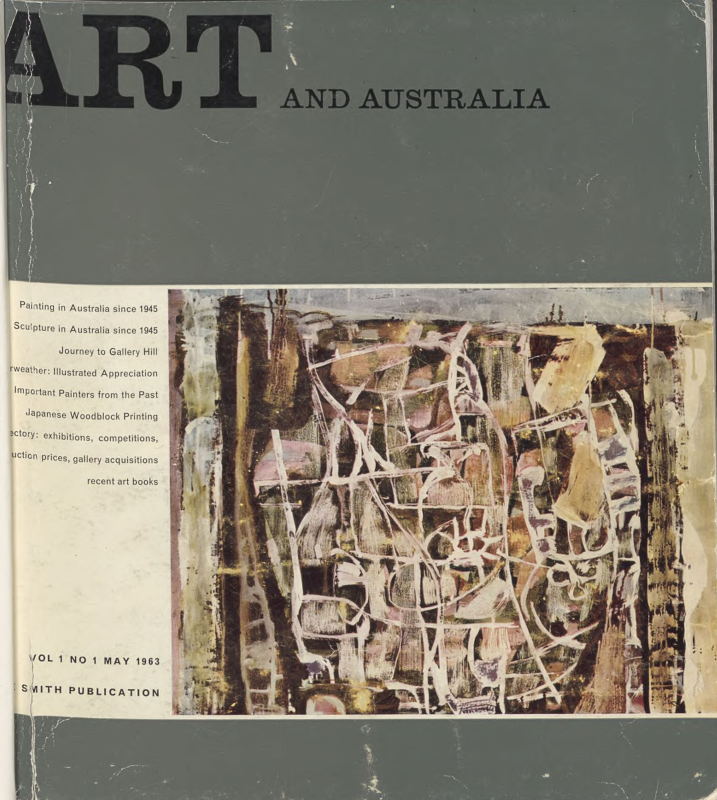
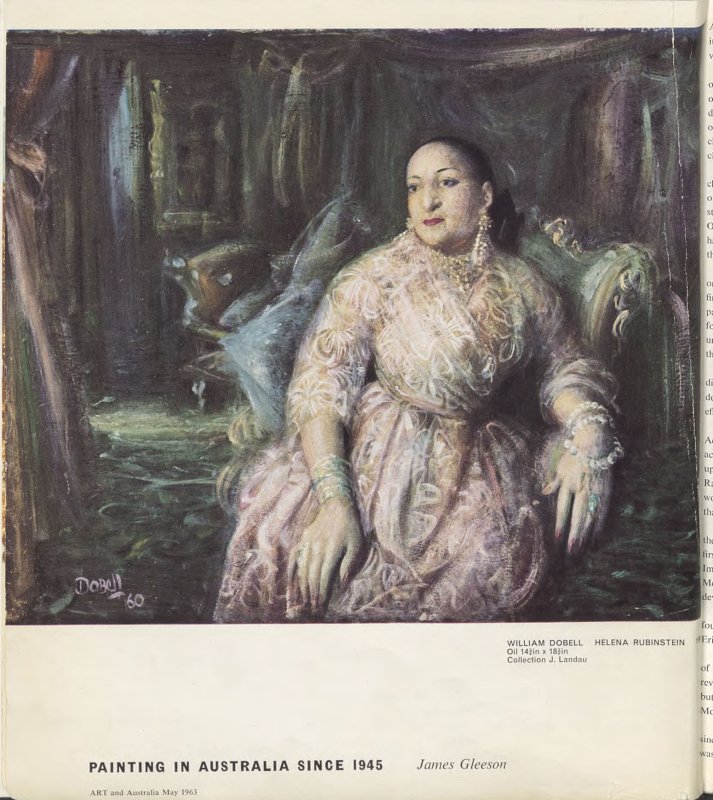
Another significant change was evident in the magazine’s advertisements. Instead of products aimed at the educated high-income set, Art and Australia contained advertisements for the niche products of commercial art galleries, themselves the beneficiaries of the contemporary art scene and its capital transformation by a new artworld industry. Like the US journal Artforum launched a year earlier, Art and Australia served art dealers, not, like its predecessor Art in Australia, the now outmoded art societies run by artists.
This is not the place to discuss the immense changes that have occurred in the art magazine ecosystem since then, from the golden age of the 1980s and 90s to the challenges of social media and online publishing in the new century. Art and Australia survived. Rebadged in 2013 as Art + Australia, in 2015 it was donated to the University of Melbourne where, relatively protected in its base at the Victorian College of Arts, the magazine is now published online. Additionally, it has invested heavily in developing its valuable archive which stretches back 100 years and continues to grow. The only comparable Australian art magazine with a growing digital archive is Artlink (45 years old). Collectively, these archives create a tradition of Australian art with enough disremembered material to historicise in the name of an ever-new future.
But will art’s future be one of ever-new invented traditions and imagined nations? In 2003, the co-founder of the Dia Art Foundation Heiner Friedrich claimed ‘Art has no history—there is only the continuous present. The non-stop presence of art!’8 You can see this vision reified in the monumental Dia Beacon galleries housing late twentieth-century trans-Atlantic minimalist and conceptual art, or for that matter in Hobart’s Museum of Old and New Art and contemporary art fairs.
Are these signs that the temporal logic that underpins the art magazine, its archive and the age of modernism, which requires engaged reading and writing, is no longer needed? Was the successful dealer Michael Reid merely being provocative or was he being prescient when, in a talk at this year’s Sydney Contemporary Art Fair, he lauded AI and claimed that ‘the role of a critic and the specialist assessment they provide may no longer be needed in a world where opinion has become so democratic’? He was referring to the ‘thumbs up or down, the smiley faces, all those emojis and the collective decision-making on social media’.9 Have we already vacated the ever new for a way of being without memory, of click and collect, or what the artist and writer Pat Hoffie called ‘enforced amnesia’?10
1. There was an earlier magazine Australian Art: A Monthly Magazine & Journal, a mouthpiece for the Art Society of New South Wales, lasted only three issues. It was launched to coincide with the 1888 centenary of the colony of NSW, which some hoped would also launch a national art. That the magazine lasted only three issues is evidence of no real national undercurrent, as is the failure of the Impressionists to create one at the time until the First World War.
2. Bernard Smith, Place, Taste and Tradition: A Study of Australian Art since 1788, Ure Smith, Sydney, 1945, pp. 15–16.
3. Nesowa, ‘Fine Art in Sydney’, Australian Art: A Monthly Magazine & Journal, February 1888, pp. 15–17.
4. James S. MacDonald, ‘Modern Art from the Viewpoint of an Australian Artist’, in Alexander McCubbin (ed.), The Art of Frederick McCubbin, Boolarong Publications, Brisbane, 1986, pp. 19–33.
5. James Gleeson, ‘Painting in Australia since 1945’, Art and Australia, vol. 1, no. 1, May 1963, p. 3.
6. Gleeson, p. 3.
7. Mervyn Horton, ‘Editorial’, Art and Australia, vol. 1, no. 2, August 1963, p. 102.
8. Calvin Tomkins, ‘The Mission How the Dia Art Foundation Survived Feuds, Legal Crises, and Its Own Ambitions’, The New Yorker, 19 May 2003, p. 46.
9. ‘Last Critic Standing A talk with Michael Reid, Sydney Contemporary Art Fair, 5, September 2026. https://www.everythingthe.com/p/last-critic-standing?utm_source=email&redirect=app-store-no-desktop&inbox=true&utm_campaign=email-read-in-app&triedRedirect=true
10. Pat Hoffie, ‘Always Remember There Is No Past’, Artlink, vol. 23, no. 2, 2003, p. 26.
Author/s: Ian McLean
Ian McLean. 2026. “Disremembering Art: Art In Australia And Its Archive.” Art and Australia 61, no.2 https://artandaustralia.com/61_2/p493/disremembering-art-art-in-australia-and-its-archive
Art + Australia Art + Australia ISSN 1837-2422 All content published after October 2023 by Art + Australia is available under a Attribution-NonCommercial-NoDerivs 4.0 International Licence (CC BY-NC-ND 4.0) except where otherwise stated. For more information about use and distribution you can view our Editorial Guidelines. Art + Australia is a University of Melbourne research project
Publisher: Victorian College of the Arts
University of Melbourne


